


Biomass Pellets for Industrial Boilers – Cleaner, Cheaper Fuel
- Kamlesh BioVerse

- Mar 30
- 1 min read
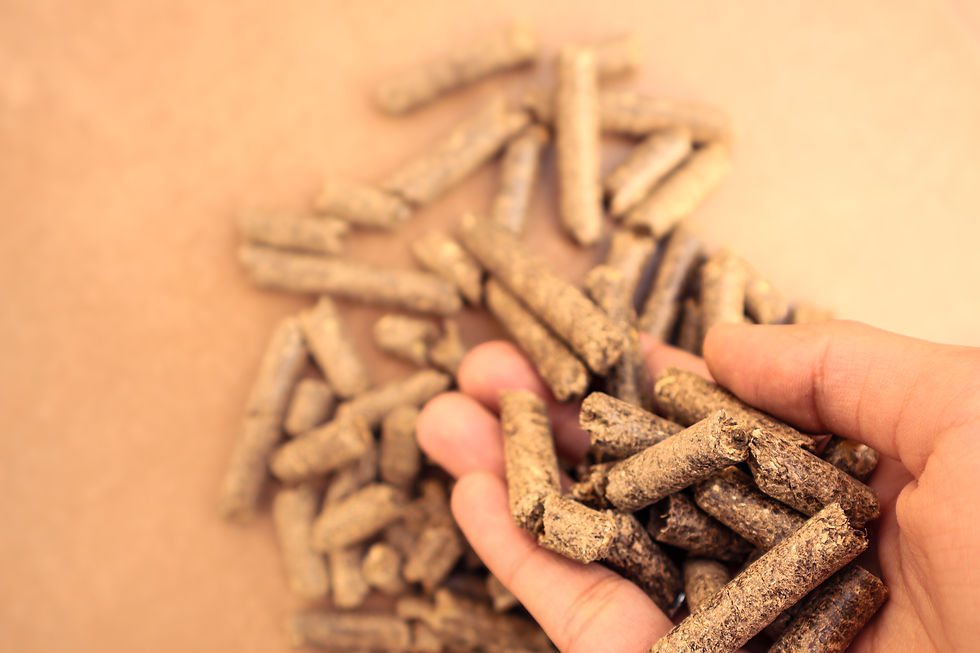
Biomass pellets are compressed blocks of fuel that can be used in various applications. If your industry uses boilers and burners, this might be an advantageous product for you.
Cleaner Aspects of Biomass Pellets
Reduced Emissions: Biomass pellets produce significantly lower emissions compared to fossil fuels. They burn more completely, resulting in fewer pollutants released into the atmosphere.
Sustainable Resource: Biomass pellets are made from organic materials, such as wood waste and agricultural residues, which are renewable resources. This helps in reducing reliance on non-renewable energy sources.
Lower Carbon Footprint: The carbon dioxide released during biomass combustion is offset by the carbon dioxide absorbed by the plants during their growth, leading to a more balanced carbon cycle.
Minimal Ash Production: High-quality biomass pellets generate less ash compared to traditional fuels, resulting in less waste and easier cleanup.
Cheaper Aspects of Biomass Pellets
Cost-Effective Raw Materials: Biomass pellets are often produced from waste materials that are inexpensive or even free, reducing overall production costs.
Efficient Energy Production: Biomass pellets have a high energy density, meaning they provide more energy per unit of weight, making them a cost-effective option for heating and power generation.
Stable Pricing: Biomass pellet prices are generally more stable compared to fossil fuels, which can be subject to volatile market fluctuations.
Reduced Transportation Costs: The densification of biomass into pellets makes them easier and cheaper to transport compared to raw biomass materials.
Conclusion
Biomass pellets offer a cleaner and more economical alternative to traditional fossil fuels. Their environmental benefits and cost-effectiveness make them an attractive option for renewable energy solutions.


Comments